
The Ultimate Guide to Choosing a Custom Body Lotion Manufacturer for Your Beauty Brand
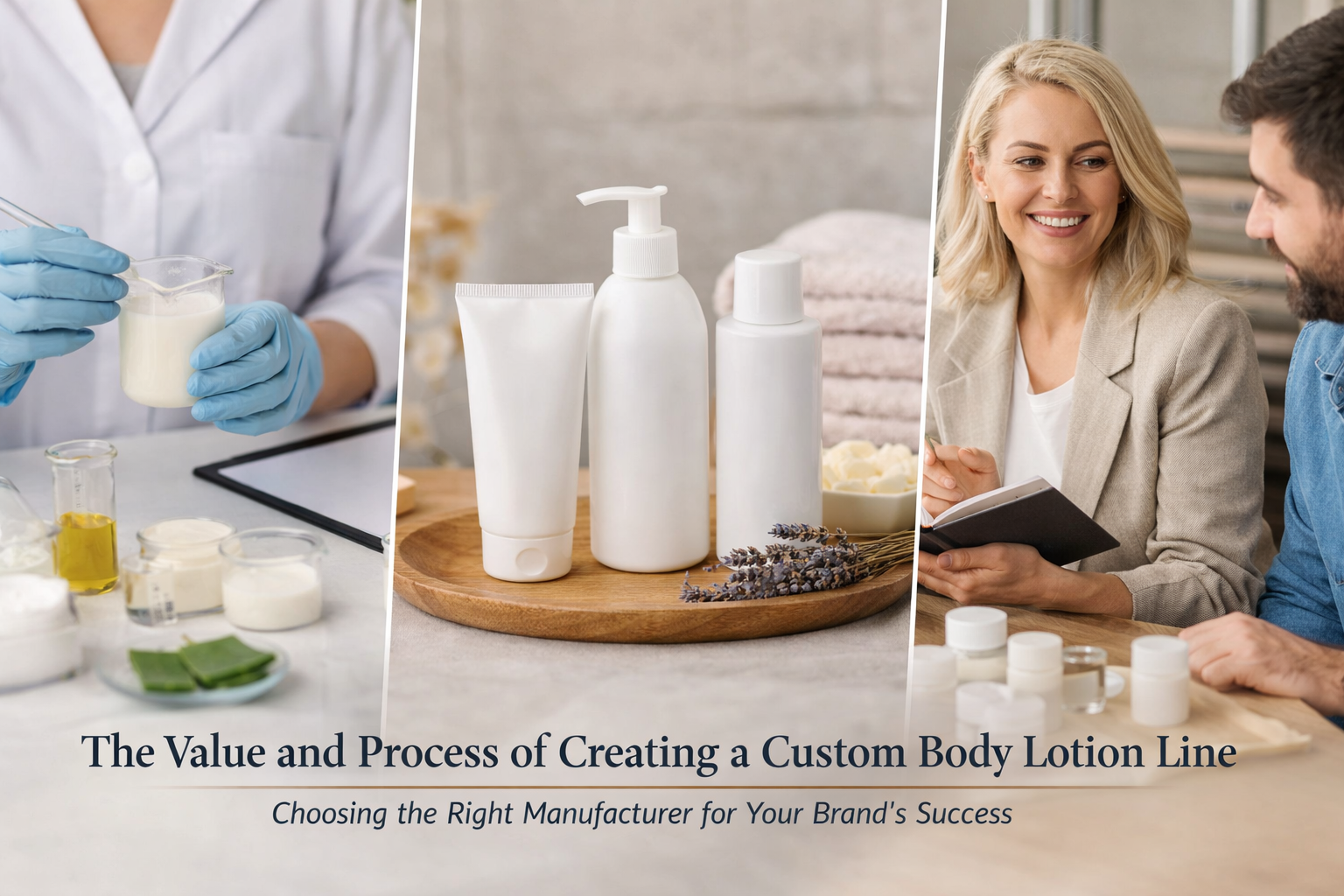
The global skincare market is awash with products, yet the desire for personalized, effective, and unique body care has never been stronger. For entrepreneurs, spa owners, and established beauty brands looking to expand, launching a signature body lotion line is a strategic move. However, the difference between a product that languishes on the shelf and one that becomes a cult favorite often lies in its formulation and quality. This is where partnering with the right custom body lotion manufacturer becomes not just a logistical decision, but the very foundation of your brand's success.
This comprehensive guide will walk you through everything you need to know about custom body lotion manufacturing. We will explore the intricacies of formulation, the criteria for selecting a partner, the step-by-step development process, and the emerging trends that will keep your brand ahead of the curve. Whether you are a startup testing the waters or an established line seeking innovation, this article is your roadmap to creating a body lotion that consumers will love.
What is a Custom Body Lotion Manufacturer and Why Does It Matter?
Before diving into the selection process, it is crucial to understand the distinct role a custom manufacturer plays. Unlike simple private label suppliers who offer pre-made formulas you can brand as your own, a custom manufacturer acts as an extension of your R&D department.
The Difference Between Private Label, White Label, and Custom Manufacturing
Navigating the beauty industry requires understanding its specific terminology. Choosing the right model depends on your budget, timeline, and need for originality.
-
Private Label / White Label: In this model, a manufacturer produces a standard, pre-existing formula. You can typically choose from a catalog of products—like a "silky body lotion" or "rich body cream"—and select your fragrance and packaging. It is the fastest route to market and is cost-effective due to economies of scale . However, the formula is not exclusive to you; other brands could be selling a virtually identical product.
-
Custom Manufacturing: This is a true partnership in co-creation. A custom body lotion manufacturer works with you from the ground up to develop a unique formula tailored to your specifications . You have control over the ingredient list, the texture (viscosity), the fragrance profile, and the specific skin benefits (e.g., firming, brightening, calming). The result is a proprietary product that belongs exclusively to your brand, fostering customer loyalty and differentiating you in a crowded market .
Why "Custom" is a Competitive Advantage
In a market saturated with options, a generic lotion simply won't cut it. Consumers are becoming ingredient-savvy and seek products that cater to their specific needs. A custom-formulated lotion allows you to:
-
Target a Niche Audience: Develop a lotion specifically for sensitive skin, eczema-prone skin, or even pre-natal skincare.
-
Control Your Narrative: You can authentically tell a story about your unique hero ingredient, ethical sourcing, or specific formulation philosophy (e.g., "vegan," "certified organic," "reef-safe").
-
Build Brand Equity: An exclusive formula cannot be price-matched by competitors selling the same generic product. Your product's uniqueness justifies its place in the market .
Key Factors to Evaluate When Selecting a Manufacturer
Choosing a custom body lotion manufacturer is a significant decision. It is a partnership that will impact your brand's reputation, compliance, and bottom line. Here are the critical factors to vet before signing a contract.
Certifications and Compliance: The Non-Negotiables
Safety and legality are paramount in the cosmetics industry. A reputable manufacturer will operate with full transparency regarding their compliance with Good Manufacturing Practices (GMP). In the U.S., while the FDA does not approve cosmetics per se, they require that products be safe and properly labeled. A GMP-certified facility (like ISO 22716) ensures that production happens in a clean, controlled environment with rigorous quality checks at every stage .
You should also inquire about specific certifications that align with your brand values:
-
Cruelty-Free: Leaping Bunny or PETA certification ensures no animal testing occurred at any stage.
-
Organic: USDA Organic or ECOCERT certification requires a stringent percentage of organic agricultural ingredients.
-
Vegan: This verifies that no animal-derived ingredients (like lanolin, honey, or collagen) are used in the formula .
-
Clean Beauty: While not a regulated term, manufacturers can provide documentation proving they are free from specific controversial ingredients like parabens, phthalates, or sulfates .
Minimum Order Quantities (MOQs) and Scalability
MOQs can be a major hurdle for small businesses. Many high-volume manufacturers require massive production runs (e.g., 10,000 units) that can tie up capital and lead to inventory waste . Fortunately, the industry is evolving.
Look for a manufacturer that offers flexibility. Some specialize in small batch production, allowing you to start with runs as low as 500 to 1,000 units. This is ideal for testing the market, launching a limited edition, or managing cash flow . Equally important is their ability to scale. As your brand grows, your manufacturer must be capable of ramping up production to meet demand without dropping quality standards .
R&D Capabilities and Ingredient Sourcing
The heart of custom manufacturing lies in the lab. You need a partner with a skilled team of chemists who understand not just how to mix ingredients, but how to make them work synergistically. Ask about their:
-
Ingredient Library: Do they have access to high-quality, innovative active ingredients (e.g., peptides, stable Vitamin C, hyaluronic acid, adaptogens)?
-
Formulation Expertise: Can they create different emulsion types (oil-in-water, water-in-oil) to achieve the desired skin feel—from a light, fast-absorbing lotion to an intensive, occlusive butter? .
-
Sourcing Philosophy: Do they prioritize ethically sourced, sustainable, or fair-trade ingredients? This aligns with growing consumer demand for supply chain transparency .
The Step-by-Step Process of Developing a Custom Body Lotion
Understanding the manufacturing timeline and process helps set realistic expectations and ensures a smooth collaboration. Here is how a typical project unfolds with a custom body lotion manufacturer.
1. The Discovery and Briefing Phase
The journey begins with a deep dive into your brand. You will discuss your brand identity, target audience, and the specific product you envision. The manufacturer will want to know:
-
Concept: What is the "hero" benefit? (e.g., 24-hour hydration, anti-aging for the body, sunless tanning) .
-
Target Audience: Is this for young adults, mature skin, men, or babies?
-
Aesthetics: What texture do you want? (e.g., a lightweight gel-lotion, a rich soufflé cream) .
-
Values: Is this product going to be organic, vegan, or feature a specific "free-from" claim? .
2. Formulation, Sampling, and the Art of Refinement
Once the brief is set, the chemists go to work. They will create initial samples based on your requirements. This is rarely a one-and-done process. You will likely go through several rounds of refinement, adjusting:
-
Viscosity: Is it too thick or too runny?
-
Sensory Experience: How does it feel upon application? Does it absorb quickly or leave a protective film? .
-
Fragrance: Does the scent profile match your vision? This often involves selecting from a fragrance library or developing a custom scent.
-
Stability Testing: While you are testing the aesthetics, the manufacturer is testing the formula's stability. They will put it through heat/cold cycles to ensure the emulsion doesn't separate, the color doesn't change, and the preservative system is effective over the product's shelf life .
3. Packaging, Filling, and Logistics
A great product deserves great packaging. You will work with the manufacturer to select the right primary packaging (the container that holds the product).
-
Choices: Options range from airless pumps (ideal for preserving active ingredients) to traditional bottles, jars, and tubes .
-
Compatibility: The manufacturer must test the formula with the chosen packaging to ensure the materials don't react and that the preservative system isn't compromised.
-
Design & Fulfillment: Many manufacturers offer turnkey solutions, including label design assistance, filling the product, and even kitting and drop-shipping directly to your customers or retailers .
Trends and Innovation in Body Lotion Manufacturing
To stay relevant, your product development should align with current market trends. A forward-thinking custom body lotion manufacturer will be at the forefront of these movements.
Inclusivity and Targeted Benefits
The days of "one-size-fits-all" skincare are fading. There is a growing demand for products that cater to specific demographics and concerns. This includes lotions formulated for different skin tones (which can have varying needs in terms of texture and concerns like hyperpigmentation), as well as products for specific age groups (like peri-menopause or mature skin) . Furthermore, "skinification" of body care—treating body skin with the same potent ingredients (ceramides, niacinamide, peptides) we use on our faces—is a dominant trend .
The Rise of Sustainable and Ethical Formulations
Sustainability is no longer a niche marketing point; it is an industry standard. Brands are seeking manufacturers who can deliver on this front through:
-
Eco-Friendly Ingredients: Using responsibly sourced, biodegradable ingredients.
-
Water-Conscious Formulations: Developing anhydrous (waterless) products or concentrates that reduce the product's water footprint and packaging weight.
-
Sustainable Packaging: Moving away from virgin plastic to PCR (Post-Consumer Recycled) materials, glass, aluminum, or innovative refillable systems .
Conclusion: Your Path to a Successful Product Launch
Bringing a custom body lotion to market is a complex but immensely rewarding journey. It requires vision, patience, and a trusted manufacturing partner who acts as a guide and collaborator. From the initial concept and stringent compliance checks to the final stages of packaging and fulfillment, every step is an opportunity to infuse your brand's unique identity into a product that resonates deeply with consumers.
By focusing on a true custom manufacturing partnership, you are not just buying a product; you are investing in intellectual property and brand equity. You are creating something that belongs to you—a distinctive offering that stands out in a sea of white-label sameness.
Ready to Bring Your Unique Vision to Life?
Your brand deserves a formula as unique as your story. Don't settle for generic solutions. Partner with a custom body lotion manufacturer that listens to your needs, adheres to the highest standards of quality, and helps you navigate the complexities of product development.
Related_News
-

Sing Foo Participated in the 2025 Shanghai Beauty Expo
-
New GMP-Certified Production Line Officially Launched
-
New Product Series for Global Market
-
Skincare Manufacturer: How SINGFOO Masters the Art of Cosmetic Innovation
-
Cosmetic Manufacturer: SINGFOO – Where Vision Meets Precision in Beauty Manufacturing


SUBSCRIBE
IF YOU REQUIRE THE MOST SUITABLE PRODUCTS, FEEL FREE TO CONTACT US.
INQUIRY